Roland OCTAPAD SPD-30 Digital Percussion vs Roland SPD-SX Percussion Sampling Pad (2026): Key Differences
As an Amazon Associate we earn from qualifying purchases. Links on this page are affiliate links.
This comparison of roland octapad spd 30 digital percussion vs spd sx percussion sampling highlights two distinct tools. Both units offer rugged designs and USB connectivity for MIDI and memory storage. They share a focus on reliable triggering for live performance. The main difference lies in their core function. The SPD-30 acts as a controller for external modules or acoustic triggers. The SPD-SX is a standalone sampler with significant internal memory. You choose based on whether you need a pad or a sound engine.
Key differences
| Aspect | Roland OCTAPAD SPD-30 Percussion Pad | Roland SPD-SX Sampling Pad |
|---|---|---|
| Core Function | Digital percussion pad controller | Percussion sampling pad |
| Pad Count | 8 pads (implied by name) | 9 velocity-sensitive rubber pads |
| Internal Memory | Not listed | 4 GB |
| Dimensions | 21.3 x 10.8 x 3.5 inches | 14.4 x 13.6 x 3.75 inches |
| Effects | Not listed | Three multi-effects units |
Which one should you choose?
Choose Roland OCTAPAD SPD-30 Percussion Pad if
- You need a controller to trigger sounds from an external module or acoustic drum triggers.
- You prefer a longer, narrower form factor for a compact setup.
- You want dedicated pad indicator lights for low-light operation.
Choose Roland SPD-SX Sampling Pad if
- You require a standalone unit to record and play back your own samples.
- You need extensive internal memory for large audio libraries without external drives.
- You want onboard multi-effects processing and real-time control knobs.
Verdict: The SPD-30 is the better choice if you already have a sound module and need a durable, dedicated trigger pad. The SPD-SX is the superior option if you need a complete, self-contained sampling workstation with onboard effects and memory.
SPD-30 vs SPD-SX Comparison
Pad Count
The Roland SPD-30 features eight dedicated rubber pads arranged in its octagonal design. This provides a consistent surface area for each trigger point. In contrast, the SPD-SX includes nine velocity-sensitive rubber pads. It also adds two external dual-trigger inputs for expanding your kit. The SPD-SX offers one extra internal pad and more flexible input options for connecting acoustic drums or additional cymbals. If you need more trigger zones, the SPD-SX has the advantage here.
Internal Memory
Memory capacity defines how many sounds you can carry without external drives. The SPD-SX contains 4 GB of internal memory. This allows for approximately 720 minutes of mono sampling directly on the unit. The SPD-30 does not list specific internal sample storage capacity in its specifications. It relies on USB memory for storing sounds and data. For players who want to load large libraries of custom samples without extra hardware, the SPD-SX provides clear superior storage.
Effects Processing
Real-time sound shaping is critical for live performance. The SPD-SX includes three units of multi-effects processing. It features two real-time control knobs and four dedicated effect buttons for immediate adjustments. The SPD-30 specifications do not mention onboard multi-effects processing. It focuses on clean triggering and phrase looping rather than built-in audio effects. If you need to modify sounds on the fly during a set, the SPD-SX offers essential tools that the SPD-30 lacks.
Phrase Looping
Creative workflow differs between these two units. The SPD-30 includes a Phrase Loop function. You can record your playing in real time and overdub up to three layers. This supports a jamming and composition workflow. The SPD-SX focuses on sample management and effects rather than layered looping in its listed features. While both units support MIDI recording, the SPD-30 provides a dedicated looping feature for immediate creative feedback. This makes it better for quick sketching.
Physical Size
Portability and desk space matter for gigging musicians. The SPD-30 measures 21.3 inches in width, 10.8 inches in length, and 3.5 inches in height. It weighs 8.44 pounds. The SPD-SX is more compact, measuring 14.4 inches in width, 13.6 inches in length, and 3.75 inches in height. It weighs slightly less at 8 pounds. The SPD-30 is wider, while the SPD-SX is deeper but narrower. The SPD-SX offers a smaller footprint for tighter setups.
Which Roland Pad Suits You Best
Drummer needing extra triggers for acoustic kit
The SPD-30 offers four dual-trigger inputs plus a hi-hat controller. This allows you to connect external acoustic drum triggers or add extra pads to create a mini electronic kit. The rugged design and large backlit LCD ensure easy operation in low-light conditions, making it ideal for expanding your existing acoustic setup with reliable triggering.
Performer wanting to record and layer phrases
You can use the Phrase Loop function to record your playing in real time and overdub up to three layers. This feature helps inspire creativity during practice or live sets. The USB connectivity supports both MIDI data and memory storage, allowing you to save your loops and retrieve them later without needing additional external hardware or complex setups.
Musician requiring extensive internal sample storage
The SPD-SX includes 4 GB of internal memory, enabling approximately 720 minutes of mono sampling without external memory. It features nine velocity-sensitive rubber pads and two external dual-trigger inputs. This configuration supports efficient audio data management through multi-pad sampling, giving you ample space to store and access your own custom sounds directly on the device.
Artist needing onboard effects and editing tools
This unit provides three units of multi-effects onboard, controlled by two real-time knobs and four dedicated effect buttons. The performance monitoring system displays individual pad dynamics indicators for status and audio-level activity. Its comprehensive USB connectivity includes mass storage and audio support, allowing for advanced sample editing and immediate access to over 10,000 additional samples via registration.
The products compared
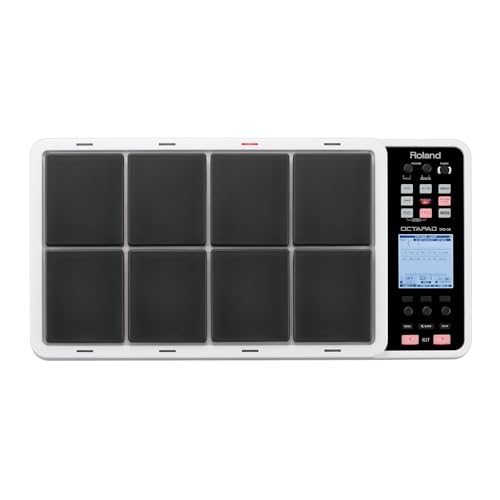
Roland OCTAPAD SPD-30 Percussion Pad
Best for: live performance and acoustic drum expansion
- Connectivity
- USB MIDI, USB memory
- Dimensions
- 10.8 × 21.3 × 3.5 inches
- Weight
- 8.44 pounds
View on Amazon: Roland OCTAPAD SPD-30 Percussion Pad Affiliate link
The Roland SPD-30 is a rugged, road-worthy digital percussion pad. It features eight pads with accurate triggering and excellent isolation. A large backlit LCD and indicator lights help you play in low light. It includes four dual-trigger inputs and a hi-hat controller for expanding your kit. You can use the Phrase Loop function to record and overdub up to three layers. USB connectivity handles MIDI and memory storage.
Pros
- Rugged, road-worthy design for durability
- Large backlit LCD and pad indicator lights
- Four dual-trigger inputs plus hi-hat controller
- Phrase Loop function for recording and overdubbing
Cons
- No Bluetooth connectivity listed
- No smartphone app support listed
- No remote control included
Good fit if
- You need a durable pad for live performance
- You want to connect acoustic drum triggers
- You need to record and overdub phrases
Skip if
- You require wireless Bluetooth connectivity
- You want to control the pad via a smartphone app
- You need a remote control for operation
Verdict: Roland SPD-30 Digital Percussion Pad is a solid choice for drummers who need a rugged, reliable pad for live use or acoustic integration. It fits those who prioritize durability and expansion over wireless convenience.

Roland SPD-SX Sampling Pad
Best for: players needing large internal sample libraries
- Pad Type
- Velocity-sensitive rubber
- Internal Memory
- 4 GB
- Connectivity
- USB mass storage, USB MIDI/audio
- Dimensions
- 13.6 × 14.4 × 3.75 inches
- Weight
- 8 pounds
View on Amazon: Roland SPD-SX Sampling Pad Affiliate link
The Roland SPD-SX is a percussion sampling pad with nine velocity-sensitive rubber pads and two external dual-trigger inputs. It features 4 GB of internal memory, allowing for approximately 720 minutes of mono sampling without external storage. The unit includes three units of multi-effects with real-time control knobs. This device suits players who need extensive sample libraries and robust onboard audio management for live performance or studio work.
Pros
- 9 velocity-sensitive rubber pads
- 4 GB internal memory
- 3 units of multi-effects
- 2 external dual-trigger inputs
Cons
- Rubber pads may feel less realistic than mesh
- Limited to mono sampling in internal memory
- No mention of Bluetooth connectivity
Good fit if
- You need extensive internal sample storage
- You require multiple effect units
- You want dedicated trigger inputs
Skip if
- You prefer realistic mesh pad feel
- You need stereo sampling internally
- You require wireless connectivity
Verdict: Roland SPD-SX Sampling Pad fits players who prioritize internal memory capacity and onboard effects over pad realism. It is a dedicated tool for sampling rather than a standard drum replacement.
Specifications side by side
| Spec | Roland OCTAPAD SPD-30 Percussion Pad | Roland SPD-SX Sampling Pad |
|---|---|---|
| Pad Type | not stated | Velocity-sensitive rubber |
| Internal Memory | not stated | 4 GB |
| Connectivity | USB MIDI, USB memory | USB mass storage, USB MIDI/audio |
| Dimensions | 10.8 × 21.3 × 3.5 inches | 13.6 × 14.4 × 3.75 inches |
| Weight | 8.44 pounds | 8 pounds |
| Size | medium | 6.80 |
| Color | Standard | Not Available |
| Model | SPD-30 | SPD-SX |
Frequently asked questions
Is the Roland SPD-30 better for live acoustic drum expansion?
Yes, the SPD-30 is ideal for this role. It features four dual-trigger inputs and a hi-hat controller. This setup lets you connect external acoustic triggers to your electronic kit. The unit is built for rugged reliability during live performances. It serves as a sturdy expansion tool for drummers who need to integrate acoustic elements with electronic sounds.
Does the SPD-SX offer more internal sample storage?
The SPD-SX is designed for players who need large internal sample libraries. It acts as a dedicated sampling tool rather than a standard drum replacement. This focus on memory capacity allows you to load extensive sound collections onboard. It prioritizes onboard effects and storage space over the physical pad realism found in other models.
How do the physical dimensions of the SPD-30 compare?
The SPD-30 is a medium-sized unit measuring 21.3 inches in width and 10.8 inches in length. Its height is 3.5 inches, and it weighs 8.44 pounds. This octagonal design provides a consistent surface area for each trigger point. The larger footprint accommodates eight dedicated rubber pads for versatile playing.
What are the size specifications for the SPD-SX?
The SPD-SX is slightly more compact, measuring 14.4 inches in width and 13.6 inches in length. It stands 3.75 inches tall and weighs 8 pounds. This form factor houses nine velocity-sensitive rubber pads. The design is optimized for portability while maintaining enough surface area for complex sampling performances.
Which unit is lighter and easier to transport?
The SPD-SX is slightly lighter at 8 pounds. The SPD-30 weighs 8.44 pounds. Both units are relatively portable for live use. The SPD-SX’s compact dimensions also make it easier to fit into standard gear cases. The SPD-30’s larger size requires more space on a rack or stand.
Can the SPD-30 handle dual-trigger inputs?
Yes, the SPD-30 includes four dual-trigger inputs. This feature allows you to connect multiple external triggers to a single pad zone. You can expand your acoustic drum kit by adding extra pads or cymbals. This makes it a flexible choice for drummers who want to hybridize their acoustic setup with electronic sounds.
Does the SPD-SX include external trigger inputs?
The SPD-SX includes two external dual-trigger inputs. This allows you to expand your playing surface beyond the nine onboard pads. You can connect additional acoustic triggers or percussion pads to the unit. This capability supports more complex live setups where you need to trigger samples from various physical sources.